
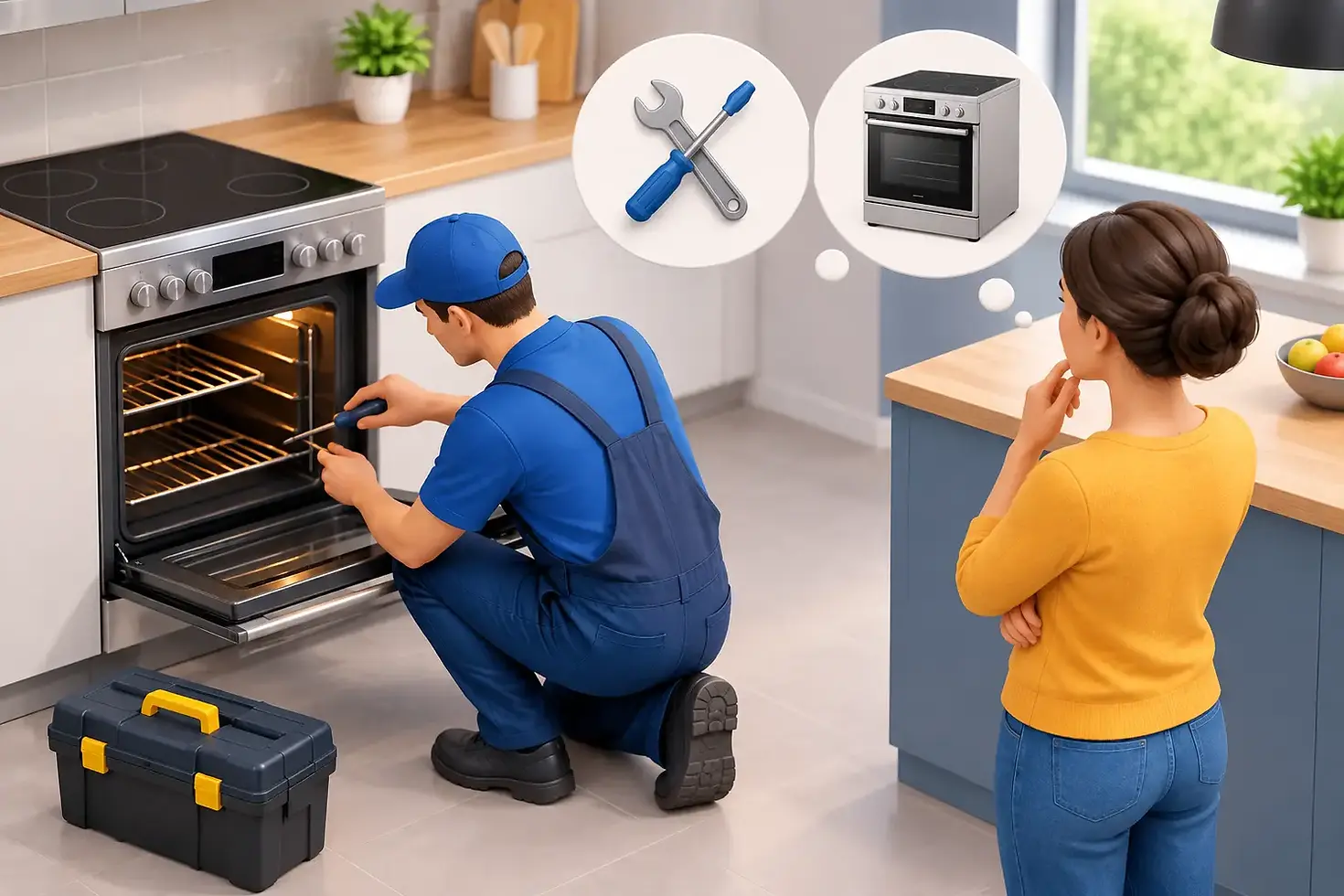
Is Oven Repair Worthwhile? A Clear Way to Decide

A turkey that will not brown, cookies that burn on one side, or an oven that will not heat at all can disrupt more than dinner plans. Is oven repair worthwhile when a replacement is only a trip to the appliance store away? For many Lower Mainland homeowners, the answer is yes - provided the problem is accurately diagnosed, the appliance is otherwise in sound condition, and the repair cost is sensible for its age and value.
The right decision is rarely based on one symptom alone. A professional assessment can distinguish a repairable heating or control issue from a failing appliance that is likely to need repeated service. That clarity matters whether you have a dependable basic range or a built-in premium wall oven.
When oven repair is usually worthwhile
Repair is often the practical choice when the oven is under 10 years old, has been reliable until now, and needs one clearly identified component. Many common failures are isolated rather than signs that the entire appliance has reached the end of its service life.
For electric ovens, a failed bake or broil element, damaged temperature sensor, worn door gasket, faulty igniter on an electric range, or malfunctioning control component may be repairable. Gas ovens commonly develop problems with igniters, burners, flame sensors, safety valves, or controls. These parts can prevent normal heating, but they do not automatically mean the appliance should be replaced.
Repair can also make particular sense for built-in ovens, slide-in ranges, and premium appliances. Replacement may involve more than buying a new unit. Cabinet modifications, electrical changes, gas-line work, delivery access, installation, and matching existing kitchen finishes can significantly increase the total project cost. A properly completed repair may keep a high-quality appliance in service without turning a single failure into a kitchen renovation.
A useful guideline is to compare the estimated repair with the cost of a comparable replacement, including installation. If the repair is a modest portion of that total and the oven is in otherwise good shape, repairing it is often the better value. It is a guideline, not a fixed rule. An older but well-maintained premium oven may still be worth repairing, while a newer unit with repeated electronic faults may not be.
Is oven repair worthwhile when the appliance is older?
Age matters, but it should not decide the question by itself. Most ovens and ranges can provide many years of service, especially when they have not experienced frequent breakdowns, corrosion, or control-board problems. The key question is whether the current issue is isolated or part of a pattern.
An older oven may still be a strong repair candidate if it heats evenly, the door and racks are in good condition, replacement parts remain available, and it has required little service in recent years. In contrast, replacement becomes more reasonable when several major issues appear together: inaccurate temperatures, damaged hinges, failing elements, unreliable controls, visible rust, and recurring power or ignition problems.
Parts availability is especially relevant for discontinued models. A technician may be able to source compatible parts for some appliances, but a repair loses value if the needed part is unavailable, excessively costly, or likely to take an unreasonable time to obtain. This is why a diagnosis should come before a repair-or-replace decision.
The signs that point to a repairable problem
Certain symptoms frequently have a defined cause. An oven that takes too long to preheat may have a weak heating element, a temperature sensor issue, or a problem with the control system. If food cooks unevenly, the cause may be airflow, a failing convection fan, a door seal that is letting heat escape, or an oven calibration issue.
A digital display that is blank or unresponsive does not always mean the complete control board must be replaced. Power supply problems, damaged wiring, a failed relay, or a control fault can produce similar symptoms. Likewise, a gas oven that clicks but will not light may need an igniter or another ignition-related component rather than a complete replacement.
Homeowners should avoid guessing based on a single symptom. Modern ovens combine high-voltage electrical parts, heating systems, electronics, and, in gas models, fuel and combustion components. Replacing the wrong part wastes money and may leave the underlying fault unresolved.
When replacement is the better investment
There are situations where putting money into an oven is difficult to justify. If repair costs approach the price of a comparable new appliance, replacement deserves serious consideration. The same applies when the oven has a history of repeat service calls for different failures. One repair can be reasonable; a chain of unrelated repairs often signals that reliability is declining.
Safety concerns should carry more weight than cost. Stop using the appliance and arrange professional service if you smell gas, see sparking or damaged wiring, notice scorch marks, experience repeated breaker trips, or find that the oven door will not close securely. A gas smell requires immediate caution: do not operate switches or create a spark, leave the area if needed, and follow your gas utility's emergency guidance.
Replacement may also be preferable if the appliance no longer fits your household's needs. A family that cooks frequently may benefit from a more dependable capacity, improved convection performance, or features that suit their routine. That is a lifestyle decision as much as a repair decision, and it is valid even if the existing unit can technically be fixed.
What a professional diagnosis should tell you
A useful oven service visit should provide more than a quick quote. The technician should test the appliance, identify the likely cause of the failure, check related components where appropriate, and explain whether the repair addresses the root problem. You should understand what part is being replaced, why it failed, and whether there are other visible concerns that could affect near-term reliability.
Ask for a clear breakdown of the service call, parts, labour, and expected turnaround time. It is also reasonable to ask whether the recommended repair is covered by workmanship and parts warranty terms. Transparent information helps you compare a real repair cost against the full cost of replacement, not just the price listed on a showroom tag.
For gas and electric cooking appliances, qualified service is particularly valuable. Licensed and insured technicians can diagnose faults safely and verify operation after the repair. This is not the place to rely on trial and error, especially when the appliance is hardwired, connected to gas, or built into cabinetry.
Consider the cost beyond the appliance price
A new oven can be an excellent choice, but its purchase price is only part of the calculation. Measure the opening, confirm electrical or gas requirements, and consider whether your existing cabinetry, venting arrangement, or countertop cutout will work with the replacement model. Built-in units and slide-in ranges can create installation requirements that are easy to overlook.
There is also the time cost. Waiting for delivery, coordinating installation, and adapting to a different appliance can be inconvenient for a busy household. If a repair can restore safe, consistent performance quickly, that convenience has real value.
On the other hand, do not keep repairing an appliance simply because replacing it feels disruptive. When an oven has become unreliable, inefficient, or unsafe, a planned replacement is usually less stressful than an emergency purchase after a complete failure.
Make the decision with the full picture
The best answer comes from balancing four things: the oven's age and overall condition, the specific fault, the complete repair estimate, and the cost and complexity of replacement. A failed element in a dependable oven is very different from repeated control failures in an aging model with unavailable parts.
For homeowners in Vancouver, Surrey, Burnaby, Richmond, and surrounding Lower Mainland communities, Van Appliance Repair Co. can assess the issue and explain the practical options before you commit to a major purchase. A timely diagnosis can protect your budget, restore your kitchen routine, and help you make a decision based on facts rather than a frustrating night without dinner.
If your oven is heating inconsistently, failing to start, displaying an error code, or showing any safety concern, arrange service promptly. A clear professional assessment is often the quickest path to a kitchen that works the way it should.


Comments