
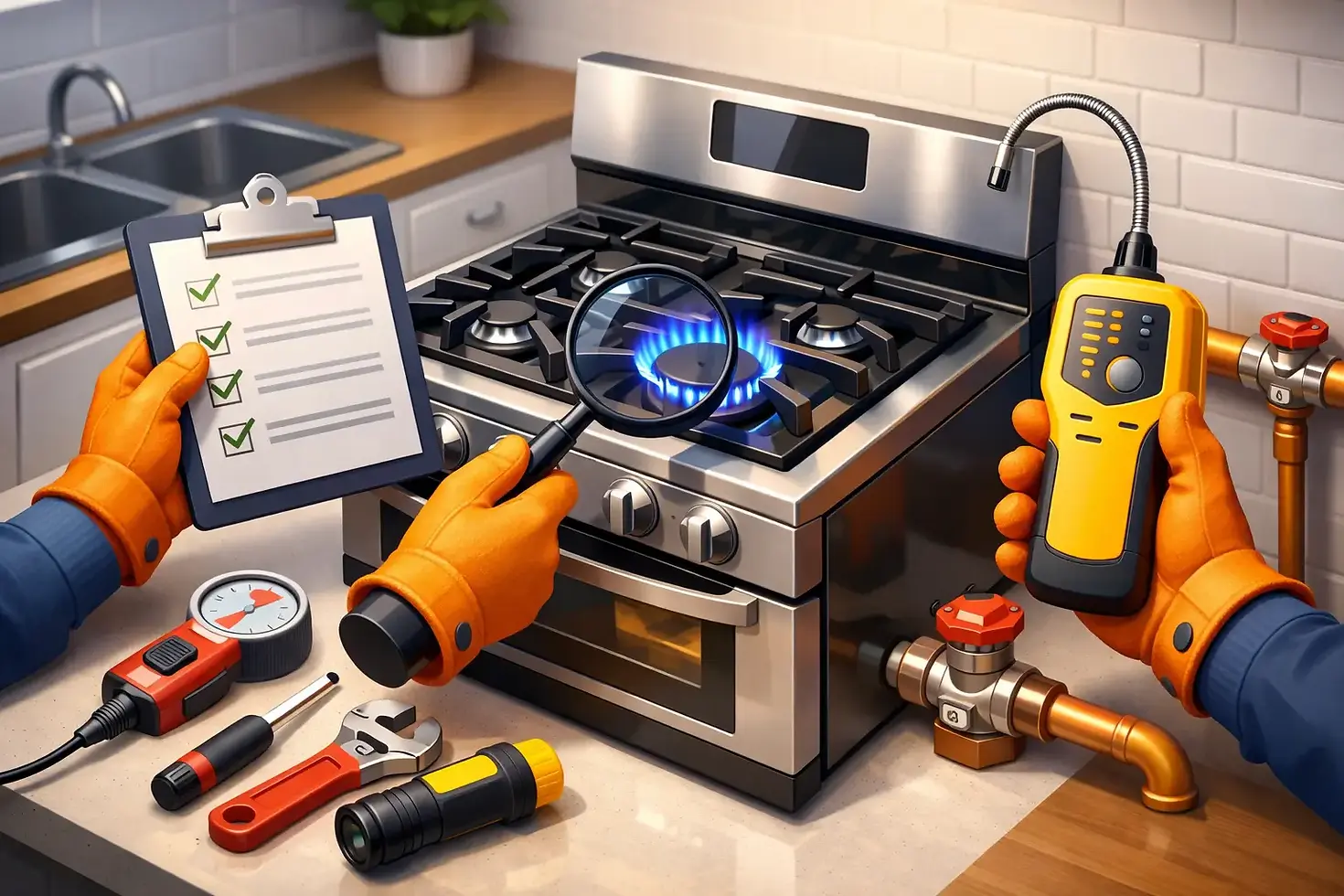
Gas Range Safety Inspection Guide for Homeowners
- Satpal Nanray
- Aug 21
- 6 min read

A gas range can give a kitchen decades of reliable service, but its safety depends on more than whether the burners still light. A weak ignition spark, a damaged flexible connector, poor ventilation, or a flame that burns yellow instead of blue can signal a problem that deserves prompt attention. This gas range safety inspection guide helps Lower Mainland homeowners recognize what should be checked, what warning signs require immediate action, and when to call a qualified technician.
Start With the Gas Smell Rule
The smell of gas is not a maintenance issue to put off until next week. If you notice a strong sulphur or rotten-egg odour near the range, do not light a match, operate electrical switches, use a phone beside the appliance, or attempt to find the leak yourself.
Turn off the burner controls if it is safe to do so, leave the home, and call your gas utility's emergency line or 911 from a safe location. Once the immediate risk has been addressed, arrange for a qualified gas appliance technician to inspect and repair the range before it is used again.
A faint, occasional smell when a burner is first turned on may be unburned gas that has not yet ignited. It should disappear within seconds. If the smell continues, the burner fails to light, or the odour returns when the range is off, stop using the appliance.
What a Gas Range Safety Inspection Should Cover
A proper inspection looks beyond the cooktop surface. It considers the gas supply, ignition system, burner performance, oven operation, ventilation, and the condition of surrounding materials. The exact scope depends on the appliance age, make, installation type, and symptoms, but several checks are common in a professional visit.
Gas supply connection and shutoff access
The gas line and flexible connector should be in good condition, correctly installed, and free from visible corrosion, kinks, crushing, or stress. The shutoff valve should be accessible and operable. Homeowners should know where it is, but should not disconnect gas fittings or apply sealant as a repair attempt.
A range that has recently been moved for flooring, cabinetry, cleaning, or another renovation deserves extra attention. Pulling an appliance forward can strain the connector or shift it against a sharp edge. This is also a good time to confirm the anti-tip bracket is engaged, which helps prevent the range from tipping if weight is placed on an open oven door.
Burner flames and ignition performance
A normal natural-gas burner flame is generally steady and mostly blue, with small yellow tips sometimes visible. Large yellow or orange flames, uneven flame rings, lifting flames, popping sounds, or soot around cookware can point to blocked ports, incorrect gas pressure, burner alignment issues, or a combustion concern.
Each burner should ignite without repeated clicking, delays, or the need for a lighter. Continuous clicking after a burner has lit can indicate moisture, a dirty or damaged igniter, a faulty switch, or an electrical issue. A burner that clicks but will not light should not be left releasing gas while you troubleshoot it.
Spills are a common cause of burner trouble. Once the range is cool, removable caps and grates can be cleaned according to the manufacturer's instructions. However, if careful cleaning does not restore an even flame and dependable ignition, professional diagnosis is the safer choice.
Oven burner, broiler, and door seal
The oven and broiler require their own inspection. Pay attention to delayed ignition, a noticeable gas smell while the oven starts, flames that appear irregular, or an oven that takes much longer than usual to heat. These symptoms can involve the igniter, burner assembly, safety valve, temperature sensor, or control system.
Check the oven door gasket for tears, gaps, hardening, or sections that no longer sit tightly against the frame. A damaged seal wastes heat, makes cooking less predictable, and can force the appliance to work harder. On premium ranges with advanced electronic controls, error codes, unstable temperatures, and intermittent ignition should be assessed with brand-appropriate diagnostic equipment rather than guesswork.
Ventilation and clearance around the range
Your range hood or overhead ventilation is part of kitchen safety, especially during high-heat cooking. Confirm that the hood fan operates, lights function, and grease filters are clean. Heavy grease buildup reduces airflow and increases the chance of smoke and odours lingering in the kitchen.
Ventilation will not repair a gas leak or combustion problem, but it helps remove heat, moisture, grease, and normal cooking by-products. Keep paper towels, cooking oils, plastic utensils, and other combustible items away from burners. Do not use the oven for space heating, even during a cold Vancouver winter.
Warning Signs That Need a Service Call
Some range issues are inconvenient. Others can become safety concerns quickly. Book service as soon as possible if you notice a recurring gas odour, burner flames that are mostly yellow, ignition that repeatedly fails, soot around the appliance, unexplained clicking, or an oven that heats inconsistently.
Other concerns include a control knob that feels loose or does not turn smoothly, a range that shifts when the oven door is opened, damaged gas fittings, or a hood fan that no longer clears smoke effectively. If carbon monoxide alarms activate, everyone should leave the home and follow emergency guidance before arranging inspection.
Do not assume a range is safe simply because it eventually turns on. Delayed ignition can allow gas to build up briefly before combustion starts. Small performance changes are often easier and less costly to correct before they lead to a complete breakdown or an urgent call.
A Practical Safety Routine Between Inspections
Homeowners do not need to dismantle a gas range to keep an eye on its condition. A simple routine can help identify problems early. During normal use, observe whether burners light promptly and whether the flame pattern looks consistent. Wipe spills once surfaces have cooled, since food debris can block burner ports and interfere with ignition.
Test your kitchen ventilation while cooking and clean hood filters as recommended by the manufacturer. Keep a working carbon monoxide alarm in the home, following local requirements and the manufacturer's placement instructions. Check that the area around the range remains clear and that children cannot reach pot handles or operate controls without supervision.
If your range has been unused for a long period, has experienced a major spill-over, was affected by flooding, or was moved during renovations, arrange an inspection before relying on it for daily cooking. The same applies when purchasing a home with an older gas appliance and an unknown service history.
When Installation Details Matter
Not every gas range is installed the same way. Freestanding, slide-in, professional-style, and dual-fuel models can have different clearance, electrical, ventilation, and gas supply requirements. Replacing one unit with another is not always a direct swap, particularly when moving to a larger premium range or changing fuel configurations.
Improper clearances can expose cabinetry and wall finishes to excessive heat. An undersized electrical supply may affect ignition or electronic controls, while an unsuitable gas connection can compromise appliance performance. Installation and conversion work should be completed by properly qualified professionals who can verify the appliance is set up for the correct fuel type and local requirements.
For homeowners in Vancouver, Surrey, Burnaby, Richmond, and surrounding Lower Mainland communities, Van Appliance Repair Co. can assess gas range performance concerns, appliance faults, and installation-related issues with experienced in-home service. A timely inspection can provide clarity before a minor symptom turns into a kitchen disruption.
Questions Homeowners Often Ask
How often should a gas range be inspected?
There is no single schedule that fits every household. Annual attention is sensible for older appliances, heavily used ranges, homes with recurring ignition problems, or ranges with a history of repairs. A newer range that is working normally may only need professional service when symptoms appear or after it has been moved or modified. Follow your manufacturer's maintenance guidance, but never wait for a routine date if you smell gas or see abnormal flames.
Can I clean burner ports myself?
Basic surface cleaning is usually appropriate once the appliance is cool and the gas controls are off. Use the manufacturer's instructions and avoid forcing sharp objects into ports, which can damage components or change the flame pattern. If cleaning does not correct the issue, have the burner assembly inspected.
Is a yellow flame always dangerous?
A small yellow tip can occur under normal conditions, but a flame that is consistently yellow, tall, flickering, or leaving soot is not something to ignore. It may indicate incomplete combustion or a burner problem. Stop using the affected burner and arrange a professional assessment.
A safe gas range should light cleanly, burn evenly, and operate without unusual smells, soot, or hesitation. If yours is giving you any reason to second-guess it, arranging a qualified inspection is the practical next step for a safer, more reliable kitchen.


Comments