
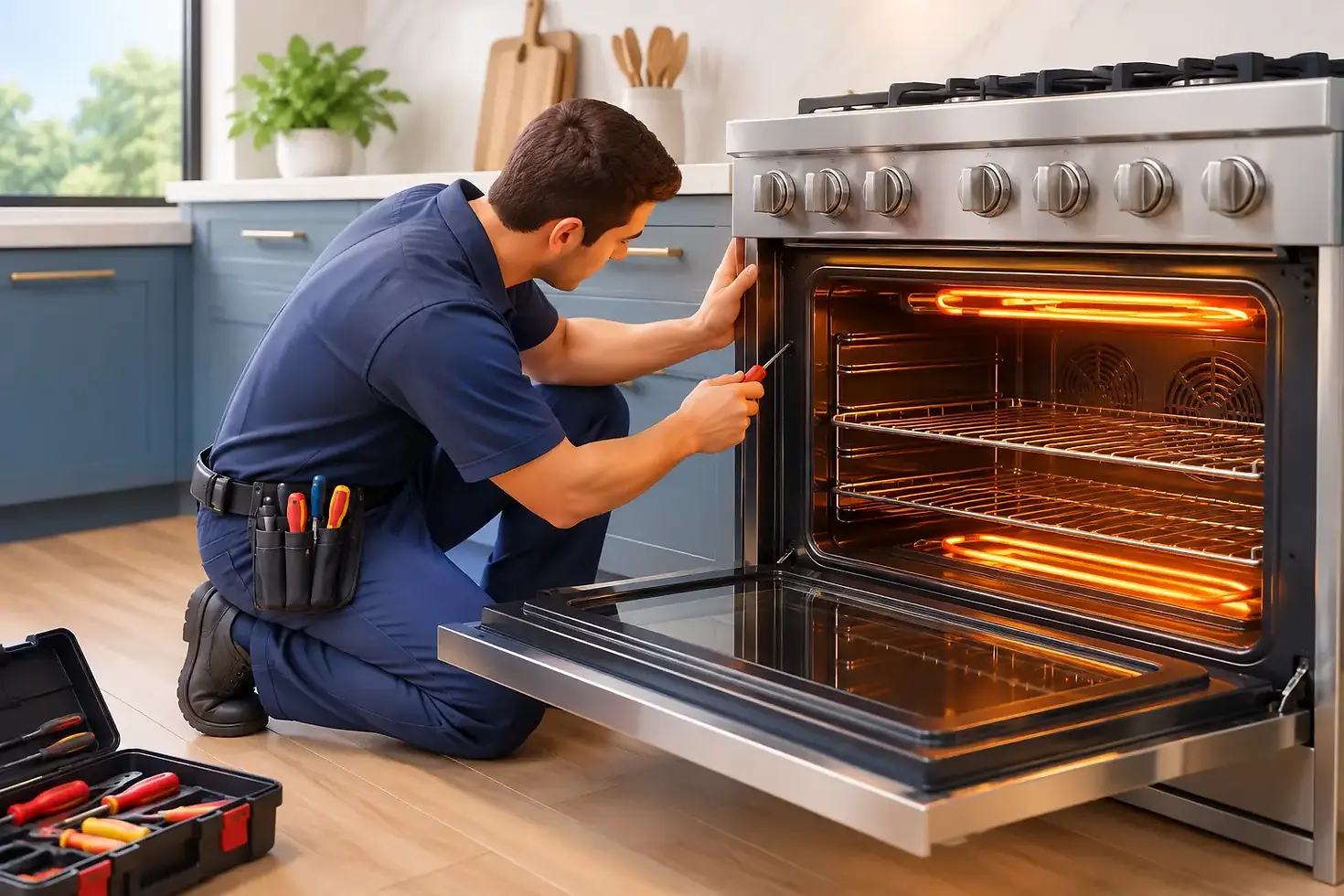
Wolf Oven Repair Case Study That Restored Heat

A Wolf oven that turns on but cannot hold temperature creates a frustrating problem: dinner plans change, cooking times become unreliable, and a premium appliance no longer performs as expected. This Wolf oven repair case study covers a representative Lower Mainland service scenario and shows why proper diagnosis matters before any part is ordered or replaced.
The homeowner had noticed the issue gradually. The oven would preheat, but roast and baking results were inconsistent. Some meals took much longer than expected, while others browned too quickly. Eventually, the display showed the set temperature, yet an independent oven thermometer confirmed that the cavity was running well below it.
For a busy household, this was not a problem to leave for later. Wolf cooking appliances are built for precise performance, and a temperature issue can affect every use of the oven.
The Service Call: A Wolf Oven Would Not Maintain Heat
The appliance in this case was a built-in Wolf electric oven. It powered up normally, the control panel responded, and the interior light worked. At first glance, the appliance appeared functional. The concern was more specific: once the oven reached the selected temperature, it could not maintain steady heat.
This distinction guided the diagnosis. An oven that will not power on calls for a different process than one that preheats slowly, overheats, displays an error code, or cycles below the selected temperature. Replacing parts based on one symptom alone can waste time and money, particularly with premium appliances where components must match the model and configuration.
The homeowner had already ruled out a simple setting issue by trying more than one cooking mode. The issue appeared during bake and convection bake cycles, which suggested that the problem was not limited to one user setting or recipe.
Why the Symptoms Did Not Point to One Quick Fix
Uneven or low oven temperatures can stem from several causes. A worn bake element may heat intermittently or fail to produce sufficient heat. A temperature sensor may send inaccurate readings to the electronic control. Wiring connections can loosen or show heat damage over time. In some cases, the control board or relay responsible for cycling the element is the source of the failure.
There is also the possibility of calibration. A minor temperature difference may be addressed through the appliance's calibration settings, depending on the model and the measured variance. Calibration is not the right answer, however, when the oven temperature swings widely, fails to recover after the door is opened, or cannot reach the target temperature at all.
That is why a qualified technician begins with testing, not assumptions.
Diagnosis Before Repair
The technician inspected the oven installation, checked the electrical supply, and confirmed that the appliance had the correct power available for operation. A premium wall oven relies on stable electrical connections and proper voltage. A supply issue can create symptoms that resemble a component failure.
Next, the technician ran the oven through a controlled heating cycle and monitored how it responded as it approached the selected temperature. The oven initially heated, but the temperature dropped too far during cycling and recovered slowly. This confirmed that the concern was not simply an inaccurate thermometer or a one-time preheat delay.
Testing then focused on the heating circuit and temperature feedback. The bake element showed signs of deterioration and did not perform consistently under load. The temperature sensor readings were also checked to ensure the sensor was communicating within the expected range. In this case, the sensor tested acceptably, which prevented an unnecessary replacement.
The failed component was identified as the bake element. Its weakened performance explained why the oven could start heating but struggled to sustain the selected temperature during normal use.
This is a useful example of why a visual inspection alone is not enough. Some failed elements visibly crack, blister, or arc. Others look relatively normal but fail electrically when the oven is operating. Proper testing distinguishes a confirmed repair from a guess.
The Repair and Verification Process
Once the issue was identified, the repair plan was explained to the homeowner before work proceeded. The technician confirmed the correct replacement component for the specific Wolf model, then replaced the faulty bake element and inspected related wiring connections for heat damage or loose terminals.
With the new part installed, the oven was tested again through a full heating cycle. The goal was not merely to see whether the element glowed. The technician verified that the oven reached temperature, cycled appropriately, and recovered heat as expected. The controls, bake function, and convection operation were also checked after the repair.
The oven returned to stable performance, allowing the homeowner to use it with confidence rather than adjusting recipes around an unreliable appliance.
For Wolf appliances, part availability can affect the timing of some repairs. Many common issues can be addressed promptly, but specialized components may need to be ordered for a particular model. Clear communication matters in either situation. Homeowners should know what failed, what part is required, and what to expect before approving the repair.
What This Wolf Oven Repair Case Study Shows
The main lesson is simple: a temperature problem is not always a calibration problem. It may be a failed element, sensor issue, control fault, wiring concern, or electrical supply problem. Each has a different repair path and cost consideration.
A professional diagnosis helps protect the investment in a Wolf appliance. It avoids replacing good parts, identifies safety concerns such as damaged wiring, and helps determine whether repair is the practical choice. In many cases, a targeted component repair can restore years of dependable service.
The age and condition of the appliance still matter. If an oven has multiple recurring faults, significant control-board damage, or a costly part requirement, the repair decision deserves a careful conversation. But a single confirmed component failure in an otherwise well-maintained Wolf oven is often worth repairing.
For homeowners, the warning signs are usually clear once they know what to watch for. A Wolf oven should be checked if it takes unusually long to preheat, cooks unevenly, cannot reach the selected temperature, trips a breaker, produces a burning smell, shows an error code, or heats when it should be off. Electrical or gas-related concerns should receive prompt professional attention rather than trial-and-error troubleshooting.
When to Arrange Professional Wolf Oven Service
A premium oven is not the place for guesswork. Wolf units combine high-output heating systems, electronic controls, specialized components, and, in some models, gas connections. Attempting to dismantle or test these systems without the right training can create a larger repair or introduce a safety risk.
Van Appliance Repair Co. provides professional appliance repair for homeowners across Vancouver, Surrey, Burnaby, Richmond, Delta, Langley, Coquitlam, White Rock, and nearby Lower Mainland communities. Licensed and insured technicians can assess Wolf ovens and other major cooking appliances, explain the findings clearly, and complete repairs backed by dependable workmanship.
If your oven is no longer heating accurately, arranging service early can prevent the issue from disrupting more meals and may keep a small component failure from becoming a larger one. A properly diagnosed repair gives you a clear answer and a practical path back to reliable cooking.


Comments