
What Causes Dishwasher Door Leaks at Home?

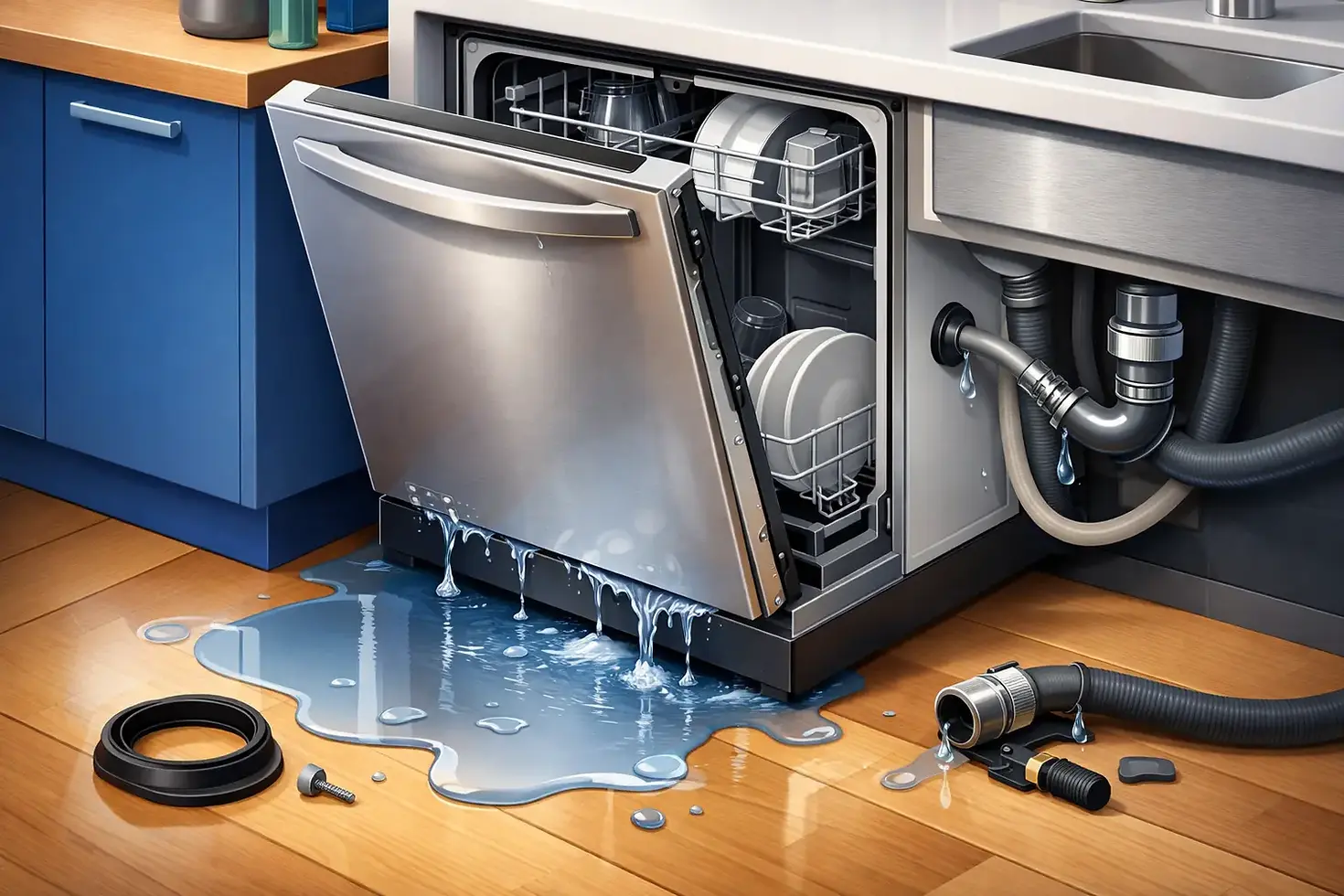
A puddle at the base of the dishwasher rarely starts as a major flood. It may appear as a damp strip along the cabinet edge, water beading under the door, or a musty smell after a cycle. Knowing what causes dishwasher door leaks helps homeowners act before moisture damages flooring, cabinetry, or the subfloor beneath a busy kitchen.
A dishwasher door is designed to contain hot, pressurized wash water while opening easily at the end of a cycle. That balance relies on several parts working together: the door gasket, latch, hinges, spray arms, detergent dispenser, racks, and the appliance's installation position. A problem in any one of these areas can send water out through the front of the machine.
What causes dishwasher door leaks most often?
The most common cause is a worn, dirty, or misshapen door gasket. This flexible rubber or vinyl seal runs around the edge of the dishwasher opening. When the door closes, it creates the barrier that keeps wash water inside.
Over time, grease, food residue, mineral buildup, and detergent film can prevent the gasket from sitting tightly against the door. It can also become brittle, torn, flattened, or pulled away from its channel. In Lower Mainland homes with hard-water buildup or frequent dishwasher use, this gradual wear is especially common.
A damaged gasket does not always leak continuously. Water may only escape during the high-pressure wash portion of the cycle, or when a heavily loaded lower rack changes how water moves inside the tub. If the leak is coming from the lower corners or along the sides of the door, the seal is a likely place to begin diagnosis.
A door that is not closing squarely
A good gasket cannot compensate for a door that is misaligned. Loose or worn hinges, a damaged latch, or a door that has been bent or pulled on can leave a small opening between the door and the tub. Even a slight gap can allow water to run down the front panel.
This issue can be easy to miss because the dishwasher may still start and complete a cycle. You may notice that the door needs an extra push to latch, sits unevenly, drops quickly when opened, or catches against nearby cabinetry. Built-in dishwashers can also shift over time if their mounting brackets loosen.
Door alignment should be checked carefully rather than forced. Repeatedly slamming or pushing hard on a misaligned door can damage the latch assembly, hinges, or control panel and turn a focused repair into a more involved service call.
Internal water spray can mimic a door seal failure
Not every front leak is caused by the door itself. Water needs to stay within the tub, but broken or misdirected components can spray it directly at a point the gasket was not designed to handle.
A cracked, split, clogged, or loose spray arm can create an unusual stream of water toward the lower section of the door. A spray arm may also strike a tall pan, utensil, or improperly placed dish and fail to rotate normally. When that happens, water can be repeatedly forced against the same area until it escapes past the seal.
Overloading the dishwasher can produce similar symptoms. Large cutting boards, baking sheets, or tall items placed at the front of the lower rack may interfere with the door closing fully. A utensil that falls through the rack can also obstruct the spray arm or damage the gasket.
If the leak appears only with certain loads, take note of what was placed in the machine. That detail can help a technician distinguish between a loading issue and a mechanical fault.
Too much detergent or the wrong product
Excessive suds are another frequent reason water finds its way out around a dishwasher door. Dishwashers require automatic dishwasher detergent. Hand dish soap, regular liquid dish soap, or too much detergent can create a thick layer of foam that expands beyond normal operating conditions.
Suds can force water past an otherwise serviceable seal, particularly near the lower corners of the door. Rinse aid settings that are too high may also contribute to foaming in some machines. If the dishwasher has recently leaked after a detergent change, that timing matters.
A one-time detergent error may be resolved by removing the suds and running appropriate rinse cycles. However, if leakage continues with the correct detergent and normal amounts, the appliance should be inspected. Persistent leaks can indicate that sudsing has exposed an existing gasket, latch, or spray-arm problem.
Installation and levelling problems can affect the door
Dishwashers need to sit level and securely anchored beneath the counter. An appliance that leans forward can place extra stress on the door and encourage water to collect at the front of the tub. One that is not firmly secured may move when racks are pulled out, gradually affecting the door's alignment.
Installation concerns are particularly relevant after a kitchen renovation, flooring replacement, cabinet work, or a recent dishwasher installation. Changes in floor height or cabinet positioning can alter the way the door closes, even if the appliance previously worked without issue.
Levelling is not simply about whether the dishwasher looks straight from the outside. It affects water movement, rack operation, door clearance, and how the gasket meets the tub. A qualified appliance technician can assess the installation while also checking for worn components that may be contributing to the leak.
A damaged tub lip or inner door panel
Less commonly, the metal or plastic surface where the gasket seats can be damaged. Corrosion, a warped inner door panel, or a crack around the tub opening can create a path for water. This is more likely in older appliances, but it can also occur when a dish rack repeatedly strikes the door area or when a foreign object becomes lodged near the seal.
These faults require a closer assessment because the best repair depends on the dishwasher's age, model, condition, and availability of replacement parts. For some premium models, a precise repair can be worthwhile. For an older unit with multiple concerns, homeowners may need clear advice on repair costs versus replacement planning.
Signs that call for prompt dishwasher repair
Do not keep running a dishwasher that leaks from the door in hopes that the problem will disappear. Water can travel under baseboards and cabinets before it becomes visible, creating a much larger repair issue than the appliance fault itself.
Arrange service promptly if you see water during every cycle, the door will not latch securely, the gasket is visibly torn, or the dishwasher is leaking onto hardwood, laminate, or finished flooring. A burning smell, electrical issue, repeated error code, or water reaching nearby outlets should be treated as urgent. Stop using the appliance and avoid touching wet electrical connections.
Before a technician arrives, it is helpful to note where the water appears, which part of the cycle it starts, whether detergent or loading habits recently changed, and the dishwasher's brand and model number. There is no need to disassemble the door or remove panels. Door springs, hinges, wiring, and sharp panel edges can make do-it-yourself inspection risky.
Get the right diagnosis before water damage spreads
A dishwasher door leak may be as straightforward as a worn gasket, but it can also point to a latch issue, failed spray arm, installation problem, or internal damage. The visible puddle does not always reveal the true source.
Van Appliance Repair Co. provides experienced dishwasher diagnosis and repair for homeowners across Vancouver, Surrey, Burnaby, Richmond, and the Lower Mainland, including major and premium appliance brands. A licensed and insured technician can identify why the leak is occurring, explain the repair required, and help restore dependable operation with minimal disruption to your kitchen.
If water is appearing at the front of your dishwasher, protect the floor, stop using the machine, and arrange service sooner rather than later. Catching a small door leak early is often the simplest way to keep a kitchen repair from becoming a cabinet or flooring problem.


Comments